In the ever-evolving world of real estate, captivating visuals and compelling information are crucial to capturing the attention of discerning buyers. A well-designed real estate brochure not only showcases a property, but also establishes credibility for the agent. Whether it’s a luxurious estate longing for its next owner or a cozy apartment in the heart of the city, the right brochure serves as a tangible reflection of both the property’s value and the promise of a new home. In this guide, we go over the most important details you need to add to your brochures, as well as the most popular ways to present them.
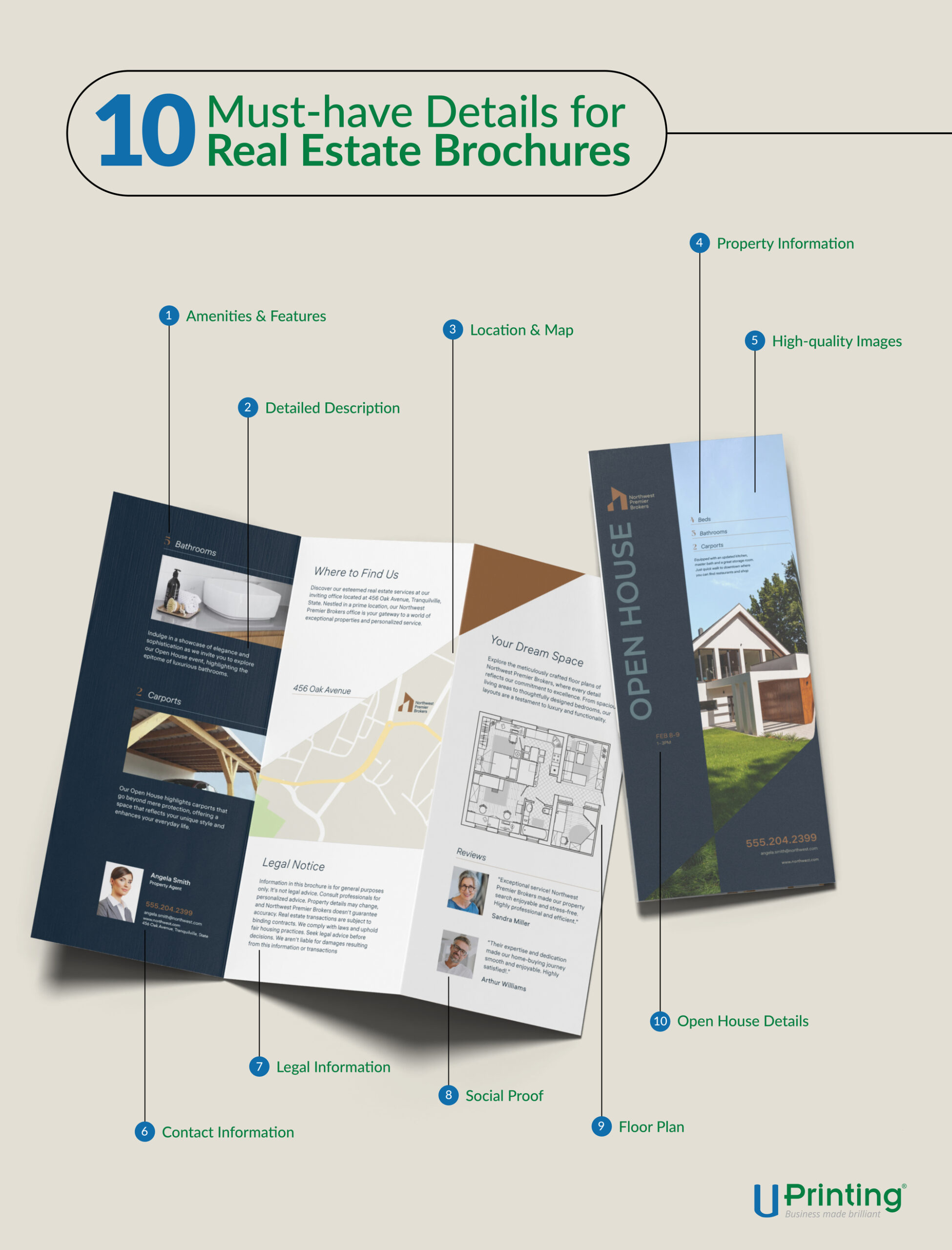
This offers the basic details of the property, providing potential buyers a quick snapshot of what to expect. It establishes the foundational facts about the listing, such as its type, size, and asking price.
Paints a vivid picture of the property, helping potential buyers visualize living there. It underscores unique features and gives context to photographs, which can help buyers connect emotionally with the space.
Photos are often the first thing people notice. High-quality images grab attention and create a positive first impression. They give potential buyers a virtual tour, highlighting the property’s best features and selling points.
A floor plan helps potential buyers understand the layout of the property. It offers insights into the flow of rooms, their interrelations, and the overall spatial arrangement, which can be a determining factor for many buyers.
By listing the amenities and features, agents can emphasize the added value and conveniences the property offers. This can include things like a modern kitchen, a swimming pool, or energy-efficient appliances, which might sway a buyer’s decision.
The location often plays a significant role in a buyer’s decision. Providing a map and discussing the neighborhood’s highlights, such as schools, parks, and shopping areas, helps potential buyers gauge the property’s surroundings and accessibility.
This is essential for direct communication. Making sure potential buyers or other agents know how to reach out is fundamental for setting up viewings or asking further questions.
Testimonials, reviews, or awards lend credibility to the agent and the property listing. They build trust by showcasing previous customer satisfaction or industry recognition.
This provides a clear invitation for potential buyers to view the property in person. An open house can be the defining factor where interest is converted into a potential sale.
It’s essential to include any mandatory disclosures or other legal information relevant to the property sale. This ensures transparency and safeguards both the buyer and the seller from future complications.
Navigating the world of real estate marketing demands more than just understanding properties; it requires mastering the art of presentation. A well-designed brochure can transform a simple piece of paper into a compelling narrative, telling the story of a home and its potential. From the initial allure of high-quality images to the structured flow dictated by strategic folds, each element of a brochure works in harmony to captivate and inform prospective buyers. In this digital age, where online listings are omnipresent, the tactile and tangible nature of brochures offers a refreshing, personal touch .that can leave a lasting impact and help you stand out and stay top of mind.